Introduction to Logging Your Contacts
Keeping an accurate log of your contacts is an essential part of amateur radio operations. Not only does it help maintain an organized record of your communications, but it also aids in confirming contacts with QSL cards. A well-maintained logbook serves as a historical archive of your amateur radio journey.
The Importance of Accurate Logging
Logging your contacts accurately is crucial for several reasons. First, it ensures compliance with radio regulations. Second, an organized log can be useful for verifying specific contacts when applying for awards. Recording details accurately is also vital should you wish to respond to a QSL card request.
Compliance with Radio Regulations
Radio regulations are put in place to ensure smooth and orderly operations on the airwaves. By keeping an accurate log, amateur radio operators can demonstrate that they adhere to these regulations. In many regions, amateur radio licenses require operators to log their contacts meticulously. This record provides evidence of compliance with conditions associated with their license.
Verifying Contacts for Awards
For many amateur radio operators, pursuing awards and certificates is a rewarding experience. These awards often require proof of contact with other stations, sometimes from various countries or regions. A detailed logbook is invaluable in these situations, as it enables operators to easily verify and present their achievements when applying for such awards. This organized record simplifies application processes and helps operators track their progress toward specific awards.
Responding to QSL Card Requests
Receiving a QSL card request is a common and delightful occurrence for amateur radio operators. When another station sends a request, having an accurate log ensures that you can respond effectively. Your logbook allows you to quickly verify the contact details, confirm the exchange, and prepare a return QSL card. This smooth reciprocal process relies on the trust and accuracy of both operators’ logs.
Information to Log
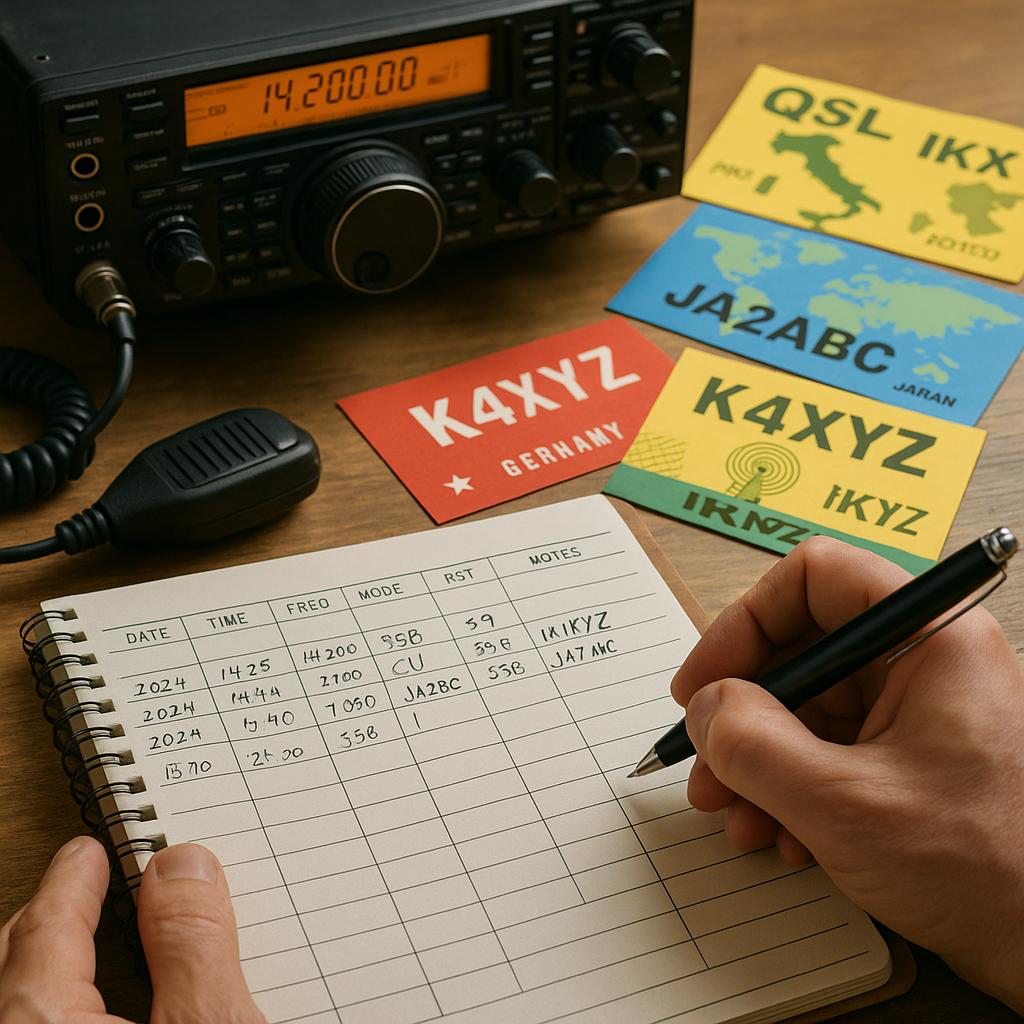
When you log a contact, it’s important to record certain details such as:
– Call sign of the contacted station
– Date and time of the contact in UTC
– Frequency or band used
– Mode of communication (SSB, CW, digital, etc.)
– Signal report exchanged
By keeping this information, your log will reflect a comprehensive history of your radio activities.
Details to Include in Your Log
Call Sign of the Contacted Station: Each amateur radio station has a unique call sign. Logging this information helps you uniquely identify each contact you have made. It also allows for precise tracking and cross-referencing when applying for awards or responding to QSL requests.
Date and Time: Logging the date and time of each contact, typically in Coordinated Universal Time (UTC), helps create an accurate chronological record of your communications. This standard time format assists in coordinating with other operators worldwide.
Frequency or Band Used: Recording the frequency or band is crucial for understanding the context of your contact. Different frequencies and bands are used for various types of communications and conditions, so this information is indispensable for a comprehensive logbook.
Mode of Communication: Whether you used Single Side Band (SSB), Continuous Wave (CW), or a digital mode for your contact, documenting this detail helps you analyze the technical aspects of your operations.
Signal Report Exchanged: Signal reports provide information about the quality and strength of the communication. Including this data in your log helps assess the effectiveness of your setup and conditions during the contact.
Applying for QSL Cards
QSL cards serve as a confirmation of a successful radiocommunication. They are physical or electronic records used to verify the details of a contact. Applying for QSL cards involves a few steps, but it’s a rewarding process that provides tangible proof of your radio achievements.
Types of QSL Cards
There are two main types of QSL cards: physical and electronic. Physical QSL cards are paper cards sent via mail, while electronic QSL cards are digital confirmations exchanged over the internet through platforms like eQSL or Logbook of The World (LoTW).
Physical QSL Cards
Physical QSL cards are traditional paper cards that radio operators send and receive via postal mail. Collecting physical cards can be an exciting hobby, akin to collecting postcards from around the world. These cards typically contain call signs, date, time, frequency, mode, and signal reports, providing a tangible connection to the contact. For many, exchanging physical QSL cards is a valued tradition in the radio community.
Electronic QSL Cards
Electronic QSL cards, or e-QSLs, are digital equivalents of traditional QSL cards. They provide faster and often more convenient confirmation of contacts. Platforms such as eQSL and Logbook of The World (LoTW) facilitate the automatic exchange of these digital confirmations. These platforms not only expedite the process but also lower the costs associated with physical mailing.
Steps to Apply for QSL Cards
To apply for QSL cards, follow these basic steps:
The Benefits of Collecting QSL Cards
Collecting QSL cards, whether physical or electronic, gives operators a satisfying visual journey of their radio experiences. Each card represents a successful contact, often with a story or memory attached. Over time, your collection becomes a personalized archive of your amateur radio endeavors, offering you insights into your progress and achievements.
Additionally, QSL cards play a crucial role in earning operating awards. Verifying contacts through cards is often a requirement for national and international awards, enhancing their significance in the amateur radio hobby.
Conclusion
Logging your contacts and applying for QSL cards is an integral part of the amateur radio experience. By maintaining an accurate log and understanding the process of obtaining QSL cards, you enrich your engagement in the hobby. These practices not only validate your efforts but also connect you with the global amateur radio community.
Implementing thorough logging and card exchanges as part of your standard radio operations also ensures that you keep abreast of regulations and appreciate the depth of your hobby. Whether competing for awards or developing international friendships, investing time into maintaining meticulous records and engaging with QSL cards offers lasting rewards.