Introduction to APRS
The Automatic Packet Reporting System (APRS) stands as an innovative digital communication protocol, notably utilized by amateur radio operators to disseminate real-time information across multiple domains. Developed by Bob Bruninga, WB4APR, during the late 1980s, APRS has since found global adoption, serving as a versatile tool for both personal and public service communications. By enabling the transmission of diverse data such as location, weather reports, and messages over radio frequencies, APRS significantly enhances the realm of amateur radio operations.
Understanding APRS Basics
At its core, APRS leverages packet radio technology, a method that facilitates the transmission of data in concise bursts, known as packets. These packets are capable of carrying a broad spectrum of information, encompassing GPS coordinates, weather station data, text messages, and more. Designed with an emphasis on efficiency and flexibility, APRS supports an extensive array of applications beyond the typical amateur radio setting. It finds utility in tracking the movement of vehicles, balloon projects, and various other mobile entities, thus proving its adaptability to numerous scenarios.
Key Components of APRS
Engaging with APRS requires familiarity with its vital components:
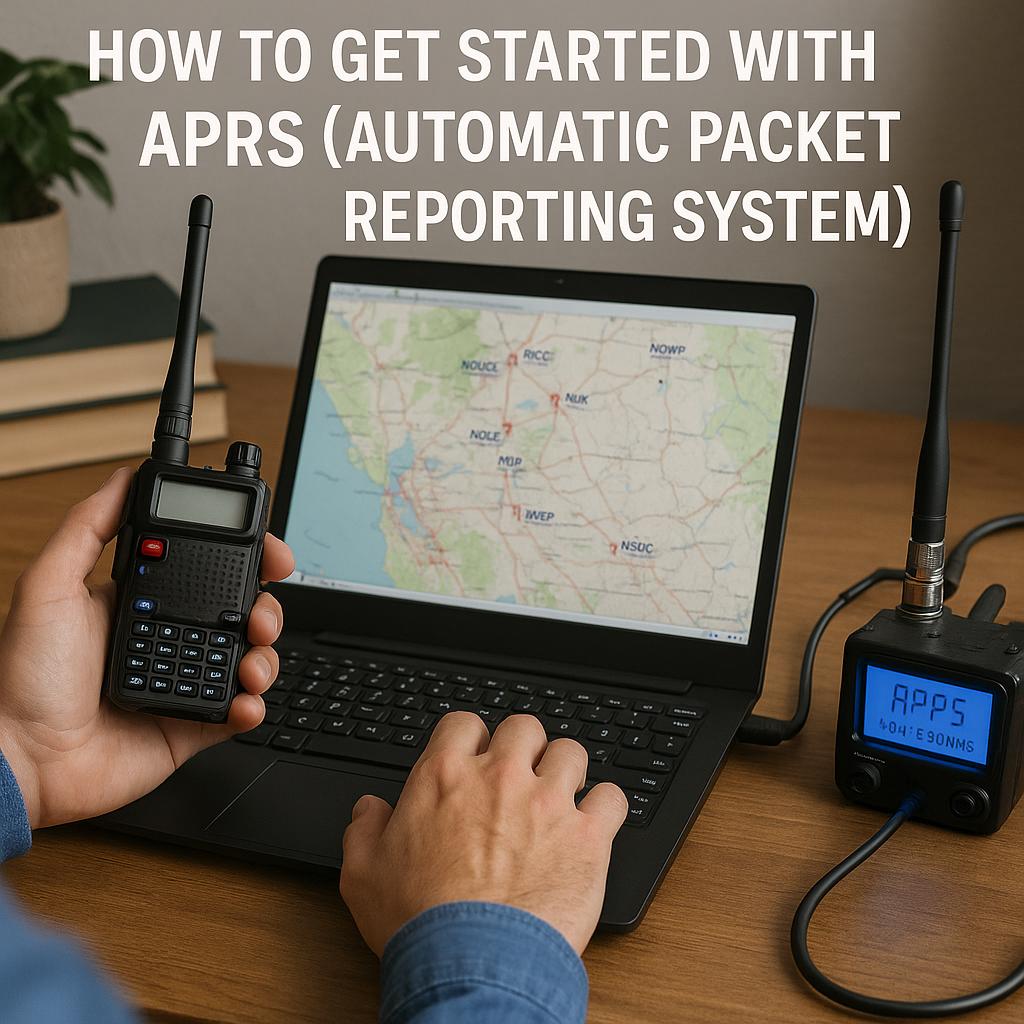
– Radio Transceiver: Typically, a VHF/UHF transceiver is employed to facilitate the sending and receiving of APRS data. The options range from portable handheld devices to more robust base station setups, depending on the user’s needs.
– Terminal Node Controller (TNC): This module acts as a modem, translating digital data into a signal format amenable to radio transmission. Some radios are equipped with built-in TNC capabilities, adding a layer of convenience.
– Computer or Mobile Device: To process APRS data, a computer or smartphone running appropriate software is necessary. Options such as APRSISCE/32 and Xastir are popular choices among users seeking to manage APRS transmissions effectively.
– GPS Receiver: For the precise transmission of location data, a GPS device is essential. Many modern radios feature integrated GPS functionality, simplifying the configuration process.
Setting Up Your APRS Station
Embarking on the APRS journey involves establishing a fundamental station, guided by these sequential steps:
1. Choose Your Radio and TNC Setup: The first decision involves opting for either an all-in-one APRS-capable radio or assembling separate components. If the latter route is chosen, ensuring compatibility between the radio and TNC is crucial for seamless operations.
2. Install APRS Software: With the appropriate software selected and installed on your computer or mobile device, ensure that it interfaces effectively with your radio and GPS setup. Configuration typically includes entering your call sign, selecting an operating frequency, and defining the data transmission path.
3. Connect the GPS Receiver: Should your chosen radio lack integrated GPS functionality, the addition of an external GPS receiver becomes necessary, facilitating the transmission of accurate location data.
4. Configure and Test Your Setup: With installation complete, proceed to configure your system to tailor it to your specific needs. Conduct thorough testing to verify that your station can successfully send and receive data packets, ensuring operational readiness.
Exploring APRS Networks
Upon achieving operational status with your APRS station, you gain the ability to connect with an extensive network of stations and digipeaters. Online resources such as FindU and aprs.fi offer platforms for the tracking and visualization of APRS data on a global scale. These platforms provide insights into real-time station movements, weather updates, and more, enriching the APRS experience.
Engaging with APRS offers a wealth of rewarding experiences, presenting myriad avenues for communication and data sharing. Whether you are a seasoned amateur radio enthusiast or a newcomer to the field, grasping and implementing APRS can significantly augment your radio activities. It also holds the potential to contribute positively to various public service functions, underscoring its value within the amateur radio community and beyond.
Advantages of APRS
One of the prominent advantages of APRS lies in its resiliency and adaptability. This protocol is adept at withstanding challenging conditions and maintaining data integrity over vast distances, a characteristic highly regarded by users engaged in emergency communication scenarios or remote area explorations. Furthermore, APRS is not limited by internet availability or cell network coverage, making it a crucial tool during infrastructure breakdowns or natural disasters.
The Global Reach of APRS
With advancements in technology, APRS has expanded its global footprint, transcending geographical barriers. The use of low Earth orbit satellites equipped with APRS capabilities has further broadened its reach, allowing users in remote areas to participate in global information exchanges. This expansion illustrates the continuing evolution and relevance of APRS in a diverse array of contexts, from hobbyist applications to critical public service initiatives.
Through these detailed insights, it becomes apparent that APRS is not merely a communication tool but a multifaceted system with extensive applications. Its integration into various sectors demonstrates its capacity to adapt and provide value, underlining the importance of understanding APRS for individuals involved in amateur radio and related fields.