Introduction
An end-fed antenna is a popular choice for amateur radio enthusiasts and shortwave listeners due to its simplicity in design and ease of installation. It is particularly useful for those who have limited space and require a versatile antenna that supports multiple bands. This article will guide you through the steps to build and tune a simple end-fed antenna.
Materials Required
The primary components required for an end-fed antenna include:
- Antenna wire: Typically, insulated copper wire with a length of half a wavelength or as determined by the desired frequency band.
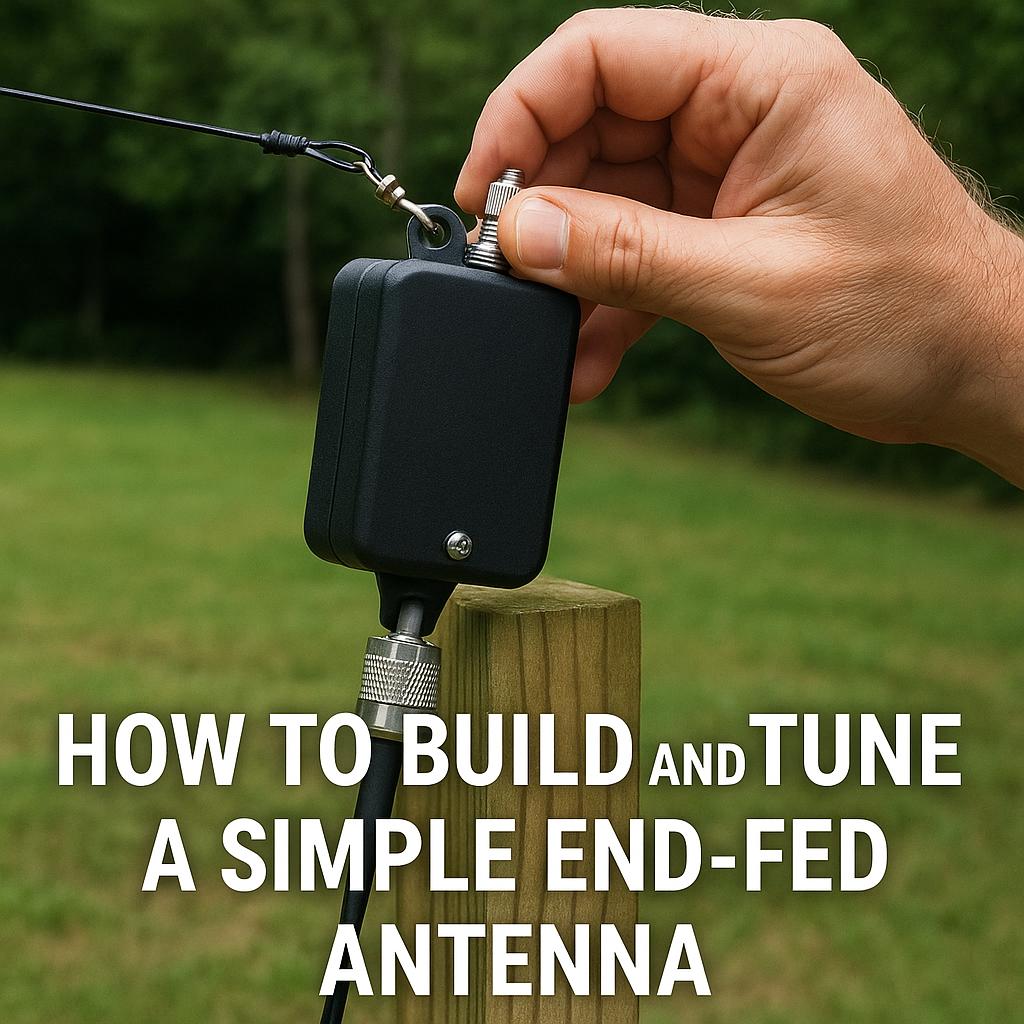
- Unun transformer: A 9:1 or 49:1 unun to match the high impedance of the antenna to the coaxial cable.
- Coaxial cable: RG-58 or RG-213 for feeding the antenna from the transmitter.
- Support masts: To elevate the antenna, ensuring it is free from obstructions.
- Grounding system: An effective ground for the unun to reduce noise and enhance performance.
Building the Antenna
Start by cutting the antenna wire to the length suitable for the desired frequency band. The total length can be calculated using the formula:
Length (in meters) = (150 / Frequency in MHz) / 2
After cutting the wire, connect one end to the output of the unun transformer. Ensure the connection is secure to minimize signal loss.
Installation
To install the end-fed antenna, run the antenna wire from the unun to the support mast. The wire can be run in a straight line, L-shaped, or even as an inverted-V depending on space availability. It is crucial to keep the wire as high above ground and away from metallic objects as possible, which could interfere with the signal.
Attach the coaxial cable to the input side of the unun, and connect the other end to your transceiver or RF equipment. Ensure all connections are weatherproof for outdoor installations.
Tuning the Antenna
To achieve optimal performance, tuning the antenna is necessary. Use an antenna analyzer to ascertain the Standing Wave Ratio (SWR) across your desired frequency bands. Adjust the length of the antenna wire or reposition it slightly to achieve the lowest SWR reading. An SWR reading of 1.5:1 or lower is typically acceptable for most applications.
Conclusion
Building and tuning a simple end-fed antenna can be an engaging project that enhances your radio listening experience. By following these steps and making the necessary adjustments, you can create an efficient antenna suited to your frequency needs. For further reading on antenna design and installation techniques, consider checking reliable resources on antenna theory and practical implementations available at specialized websites and forums.
Understanding End-Fed Antennas
An end-fed antenna operates by receiving and transmitting radio waves at one end of the antenna wire. This is unlike dipole antennas, which operate from the center. The simplicity of the design makes it an attractive option, especially for beginners in amateur radio. The antenna’s ability to support multi-band operation adds to its allure. A significant advantage is its capability to be configured in various lengths and shapes, allowing it to fit into constrained spaces while still achieving effective performance.
Choosing the Right Wire
The choice of wire type and length is pivotal for the effective performance of the end-fed antenna. Insulated copper wire is preferred due to its excellent conductive properties and durability. The length of the wire determines the operational frequency bands. Generally, the half-wave length calculation provides an efficient starting point, though slight adjustments may be required during tuning. Experimentation with different wire lengths can further optimize performance for specific bands.
Role of the Unun Transformer
The unun transformer is central to the operation of the end-fed antenna. It is responsible for matching the high impedance of the antenna’s end to the relatively low impedance of the coaxial cable. A typical unun ratio, such as 9:1 or 49:1, is employed to ensure this match. The unun transforms the impedance in such a way that maximum power is transferred from the transmitter to the antenna, optimizing transmission and reception efficiency.
Installation Considerations
Successful installation of the antenna requires careful planning and execution. Elevating the antenna using support masts is crucial as it minimizes ground-induced signal loss and reduces interference from surrounding objects. The orientation of the antenna wire, whether straight, L-shaped, or inverted-V, should be determined based on available space and desired operational characteristics. Ensuring the antenna is away from metallic structures prevents detuning and allows for optimal radiation patterns.
Grounding and Safety Measures
Grounding plays a critical role not only in preventing noise but also in ensuring safety, particularly during electrical storms. The grounding should be done following standard safety protocols to prevent damage to equipment and property. Installing surge protectors and ensuring all connections are secure improves durability and overall system reliability.
Moreover, environmental factors such as wind, rain, and temperature variations can affect the integrity of the installation. Using insulated and weather-resistant materials can help maintain consistent performance over time.
Tuning Techniques
Tuning an end-fed antenna requires precision and patience. The use of an antenna analyzer is indispensable to measure SWR effectively across your intended frequency bands. Tweaking the wire length by a few centimeters can often lead to significant improvements in SWR readings, thus enhancing the overall functionality of the antenna. Each frequency band may require slight adjustments for optimal performance.
Practical Usage and Testing
Once the antenna is installed and tuned, conducting a series of transmission and reception tests can validate its performance. Logging performance metrics over different frequencies and atmospheric conditions can provide insights into performance consistency and identify areas for further enhancement. Building and tuning an end-fed antenna can also be an educational experience, offering practical insights into radio wave propagation and antenna behavior.
Learning and Improvement
Engagement in forums and communities can provide additional support and tips for optimizing performance. Sharing experiences and solutions with fellow hobbyists can speed up the learning curve and introduce innovative techniques and methods. Reading literature on advanced antenna designs and experimenting with different setups can lead to significant improvements in understanding and application.
Conclusion
Constructing and tuning an end-fed antenna is a rewarding endeavor for radio enthusiasts. While the initial setup is relatively straightforward, the nuances of tuning and operation can present interesting challenges. Through diligent optimization and community support, one can extract maximum value from this straightforward yet versatile antenna configuration. The continuous improvement process transforms the construction of an end-fed antenna into not only an exercise in technical skill but also a deep dive into the complexities of radio communication, ultimately enriching the operator’s proficiency and enjoyment in the hobby.