Understanding Grid Squares
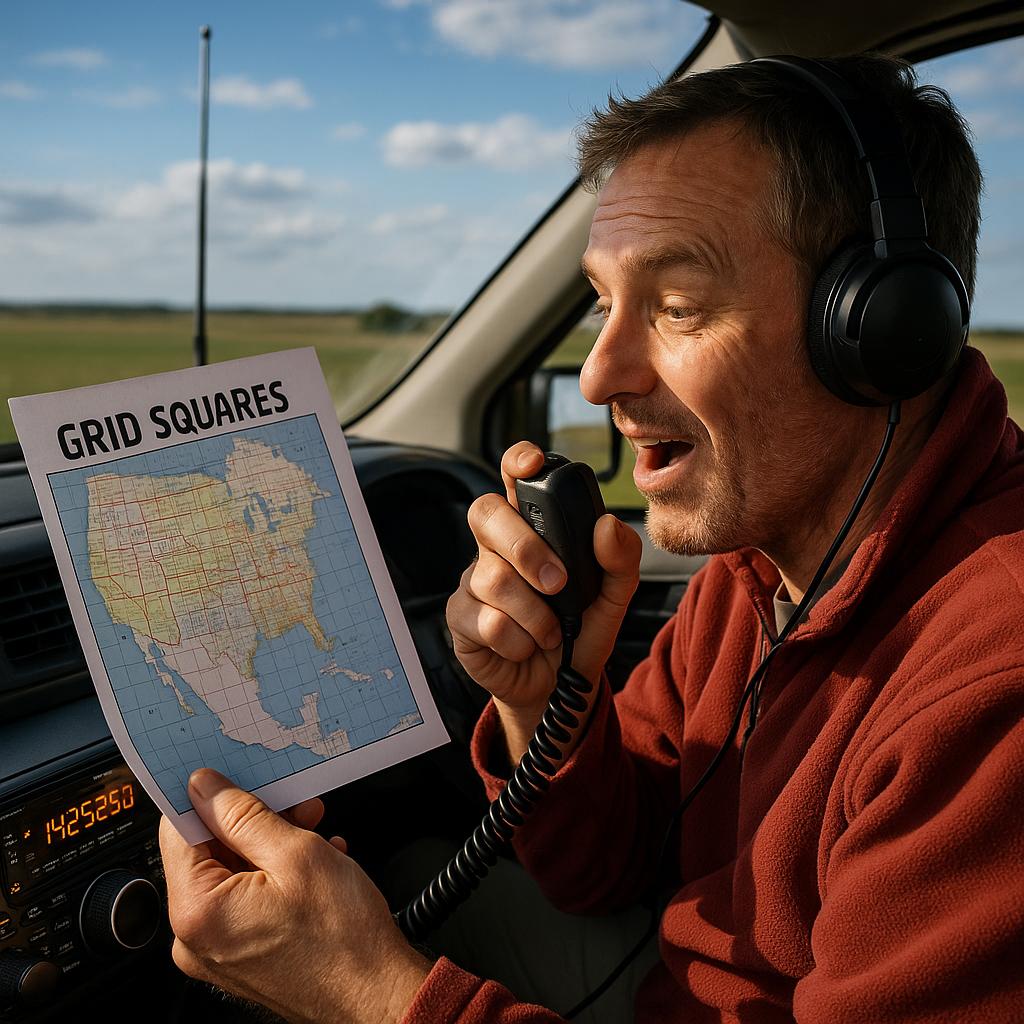
Grid squares, also known as Maidenhead locators, provide an essential system in amateur radio for pinpointing locations on the Earth’s surface. Introduced at a conference in Maidenhead, England in the 1980s, this system has become a worldwide standard. Each grid square is roughly 1° latitude by 2° longitude, or approximately 70 miles square, depending on your location.
The primary use of grid squares lies in the ability to offer a simplified yet accurate reference for geographical positions. By compressing latitude and longitude into a concise notation, amateur radio operators can conveniently exchange location information without the need for lengthy numerical descriptions.
The Structure and Significance of Grid Squares
The grid square system organizes the Earth’s surface into smaller sections for more manageable navigation and communication purposes. These squares enable operators to identify their exact geographic position succinctly using a combination of letters and numbers. To illustrate, the designation of a grid square begins with two letters indicating a 20-degree by 10-degree area. This is followed by two numbers to pinpoint a more exact 2-degree by 1-degree locality within that area. For even greater precision, additional letters and numbers may be employed.
The simplicity of this robust system supports practical applications in various fields beyond amateur radio, such as meteorology and emergency response. By providing a common framework for location identification, grid squares facilitate improved communication and coordination across diverse sectors.
Why Chase Grid Squares?
Chasing grid squares is akin to collecting stamps or coins, but with a twist specific to the world of radio enthusiasts. This activity involves making radio contacts with operators located in as many different grid squares as possible. It offers an excellent way for amateur radio operators to test the reach of their equipment and sharpen their operating skills. Moreover, it enhances the operator’s understanding of global geography and propagation conditions.
The Role of Grid Squares in Communication Challenges
The practice of chasing grid squares turns traditional radio operation into an adventurous pursuit. It introduces a competitive element, as operators endeavor to communicate with stations in grid squares they’ve not yet contacted. These interactions serve both personal and communal significance, fostering connections among enthusiasts worldwide. As individuals accumulate grid square contacts, they map their achievements against the vast and intricate grid plane that stretches across continents and oceans.
By pursuing elusive grid squares, operators refine various aspects of the communication process. They innovate strategies to overcome geographic limitations, navigate atmospheric interferences, and optimize equipment configurations. This continuous cycle of challenge and adaptation promotes the steady refinement of technical skills and strategic thinking in real-world contexts.
The Role of Awards and Competitions
Various awards and accolades are tied to successful grid square operations. These include contests that motivate operators to connect with peers across diverse grid squares within a specified time frame. Such competitions not only add an element of fun but also promote skill enhancement in operating techniques and equipment management.
The Learning Curve of Chasing Grid Squares
Contests and awards establish a structured environment for operators to develop new skills and refine existing ones. Each interaction presents an opportunity to troubleshoot unexpected issues, such as signal interference or equipment malfunctions. Operators learn to adapt swiftly, employing a toolkit of solutions ranging from signal boosting techniques to antenna adjustments.
The achievements associated with grid square contests extend beyond personal milestones, serving as a platform for knowledge exchange. Through forums, workshops, and social gatherings, enthusiasts openly share experiences and strategies, collectively advancing the field’s body of knowledge. This collaborative ethos enriches individual pursuits, fostering a diverse community of practitioners committed to mutual growth.
Tools and Technology
Several tools exist to aid amateur radio operators in their pursuit of grid squares. Software programs and websites can convert traditional coordinates into grid square notation and vice versa. Moreover, many logging programs integrate grid square tracking as a feature, allowing operators to automatically log new locations they contact.
The technological landscape supporting grid square pursuits continues to evolve, incorporating advanced data analytics, real-time visualization, and predictive modelling. Mapping software provides intricate visual representations of geographic targets, while predictive tools assist operators in forecasting optimal conditions for long-distance contacts. Simultaneously, integrated communication platforms enable seamless connections with a wider operator community, facilitating immediate feedback and collaboration.
The Community Aspect of Grid Square Chasing
For those interested in exploring further, numerous resources are available online, including educational content, mapping tools, and forums for discussing strategies and experiences with other enthusiasts. One such resource is the ARRL website, which offers detailed guides and community support for radio amateurs.
The shared journey of grid square chasing fosters meaningful relationships and cultural exchange among participants. As operators reach out to unfamiliar territories, they bridge geographic and social divides, learning from diverse perspectives and practices. This global connectivity transforms grid square chasing from a solitary hobby to an international network of collaboration, curiosity, and shared purpose.
Conclusion
Chasing grid squares is more than just a technical endeavor; it’s a gateway to learning and global connectivity. By engaging in this activity, amateur radio operators not only refine their technical skills but also become part of an international community passionate about radio communication and geographical exploration. The grid square system empowers operators to navigate complex geographic landscapes with efficiency and precision, offering an enduring framework that fuels the spirit of exploration.
Participation in grid square chasing reinforces a commitment to lifelong learning, critical thinking, and problem-solving. It challenges operators to exceed their limitations and embrace the unexpected, revealing new dimensions of capability and creativity within the world of amateur radio communication.